I don't entirely agree with the reviewer and its on Gamefaqs (urgh), but still:
Link
And another, slightly better, one here:
Link
And another. Doesn't really say too much about the actual game though.
Link
There is a walkthrough here:
Link
And a page with some good info and downloads on it.
Link
Review from the site above.
Link
Shame this seems to be the only X68000 game most people play...

This site will be an archive for Sharp X68000 game reviews. If anyone wants to submit reviews for the site, feel free to contact me - I'd like the site to cover as many games as possible. My focus will be the numerous shooters for the system - though that doesn't mean other excellent games like Aquales won't be covered!
Wednesday, 1 December 2010

Tinna and the Seven Crystals - Project Team Interrupt (1991)
There are many homebrew games that show much promise, but are never quite finished or polished off for some reason. Tinna and the Seven Crystals is one such title. It has a top down viewpoint and combines shooting, puzzle and action to an interesting mix. The aim of the game is to coerce the aforementioned 'crystals' (marbles would be a better description) with the keyboard or joystick to a target: any one of the holes on the field of play, while under a certain time limit. However, you must prevent the white crystal from dropping through or it is game over. There are also various walls and enemies on the play field to make your task more difficult.

To help you in your cause you have two attacks. Firstly a straightforward rapid fire shot that will both destroy enemies and move crystals. This shot passes through walls and so can be used quite strategically, however it consumes your vitality. Your secondary attack pulls all crystals from just outside your field of vision towards you. It also shields you too and stops you dead in your tracks while held. Again this consumes energy, but as it affects all crystals is generally more useful in directing them towards the holes. I find that the shot is generally a bit useless therefore unless you are surrounded by enemies with your back against the wall.
Bouncing around the stages are demented demon sorts who incessantly home in on your position, rebounding off walls and sending crystals flying in an effort to reach you. When they do, they'll zap your health, the amount depending on the colour of the demon, but always at an alarming rate. Their bouncing around can be both helpful and detrimental to your cause – sometimes their colliding with a crystal will send it careening off towards a hole, though annoyingly a fair few times the crystal in question will be the white one. Despite their wings they can't fly over the holes like your anime derivative witch who floats along on her broomstick. Because your two attacks consume your vitality this is perhaps the best method of defeating them - its also incredibly satisfying to watch after all their irritating moronic bouncing at you. These suckers constantly respawn after a few seconds, so with a countdown timer and vitality that is constantly falling they can put you under a lot of pressure when backed into a corner.

The game does have several problems though. Chiefly the control scheme – everything in the game has inertia, which is a plus to the gameplay, it forces you to be careful when moving the crystals and wary of the enemies crashing into them, but it can take some getting used to when controlling your character. It also means its difficult to make your character turn on the spot, so you have to get used to avoiding enemies and pushing crystals into unwanted places. The sound is also a weak point: there is only one tune and while its nice enough (though I'm sure I've heard it elsewhere before) hearing it get repeated on every level means it does get boring. The sound effects are pretty standard too. Its also very short, with only 19 levels and while they do have a time limit of 10 minutes in practice it rarely takes more than a couple for each one. There could have been a few more different enemy sprites too, though they get more dangerous throughout the game the only difference is their colour. Some variation in their contribution towards gameplay would add a lot to longevity, perhaps having them actively shielding holes or similar.
 Unfortunately searching for information regarding this game tends to bring up a lot of information on crystal meth, and there is no trace of information on the developers, Project Team Interrupt, bar that they did another game called Kaisen Game Daa! in 1990. I assume this title is a homebrew effort as it feels unfinished in some areas and it seems the developer only put out two games.
I think this is a brilliant idea for a game that is only not brilliant now due to being a bit 'unfinished'. This game is crying out for a remake - if you added some more music, story, stages, variation in enemies it would be a great candidate for PSP homebrew or similar.

To help you in your cause you have two attacks. Firstly a straightforward rapid fire shot that will both destroy enemies and move crystals. This shot passes through walls and so can be used quite strategically, however it consumes your vitality. Your secondary attack pulls all crystals from just outside your field of vision towards you. It also shields you too and stops you dead in your tracks while held. Again this consumes energy, but as it affects all crystals is generally more useful in directing them towards the holes. I find that the shot is generally a bit useless therefore unless you are surrounded by enemies with your back against the wall.
Bouncing around the stages are demented demon sorts who incessantly home in on your position, rebounding off walls and sending crystals flying in an effort to reach you. When they do, they'll zap your health, the amount depending on the colour of the demon, but always at an alarming rate. Their bouncing around can be both helpful and detrimental to your cause – sometimes their colliding with a crystal will send it careening off towards a hole, though annoyingly a fair few times the crystal in question will be the white one. Despite their wings they can't fly over the holes like your anime derivative witch who floats along on her broomstick. Because your two attacks consume your vitality this is perhaps the best method of defeating them - its also incredibly satisfying to watch after all their irritating moronic bouncing at you. These suckers constantly respawn after a few seconds, so with a countdown timer and vitality that is constantly falling they can put you under a lot of pressure when backed into a corner.

The game does have several problems though. Chiefly the control scheme – everything in the game has inertia, which is a plus to the gameplay, it forces you to be careful when moving the crystals and wary of the enemies crashing into them, but it can take some getting used to when controlling your character. It also means its difficult to make your character turn on the spot, so you have to get used to avoiding enemies and pushing crystals into unwanted places. The sound is also a weak point: there is only one tune and while its nice enough (though I'm sure I've heard it elsewhere before) hearing it get repeated on every level means it does get boring. The sound effects are pretty standard too. Its also very short, with only 19 levels and while they do have a time limit of 10 minutes in practice it rarely takes more than a couple for each one. There could have been a few more different enemy sprites too, though they get more dangerous throughout the game the only difference is their colour. Some variation in their contribution towards gameplay would add a lot to longevity, perhaps having them actively shielding holes or similar.

I think this is a brilliant idea for a game that is only not brilliant now due to being a bit 'unfinished'. This game is crying out for a remake - if you added some more music, story, stages, variation in enemies it would be a great candidate for PSP homebrew or similar.
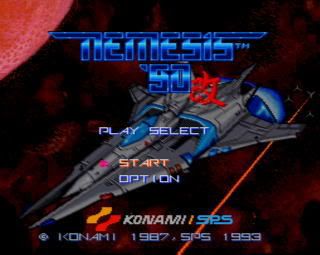
Nemesis '90 Kai – SPS - 1990
This is perhaps one of the best original X68000 games with mass appeal to Retro Gamers – after all, who doesn't like Gradius? The placing of this game within the series' story and the reasons behind its name are complicated and frankly, boring: all you need to know is that this is an oft overlooked Gradius title that punches well above it's weight. The Wikipedia article on MSX Nemesis 2 provides background though, if you are interested.
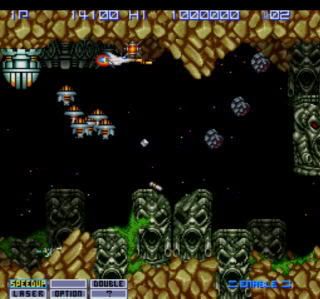
What you may want to know (or not want to know, depending on how much of a masochist you are!) is that this game can be brutal, though it is easy to manage the level of difficulty in game. The reload time and shot speeds of enemies get significantly higher with every option you pick up and at a certain level release a shot every time you kill one. Bosses too are affected by this, often gaining a pattern with each option. So for easier play the solution is to limit yourself to less options. Once you understand this it is a much more manageable task than say Gradius III. In a nasty twist of fate the last boss isn't futile as his equivalents in other titles and can be quite difficult, unless you know where to sit.
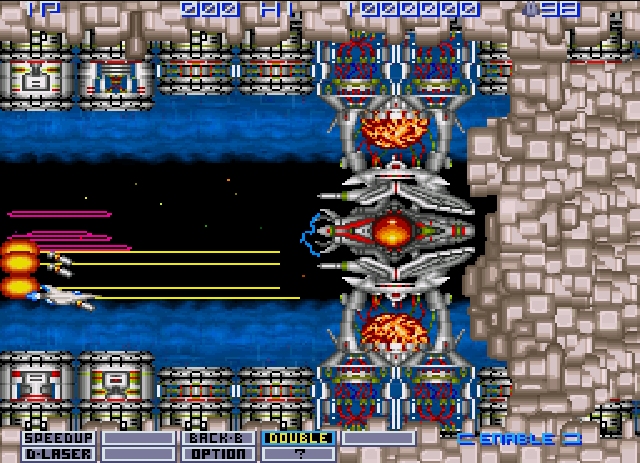
Another great feature about this game and one that is utilized in few others in the series is the 'recovery run'. That is upon defeating a boss you can fly your ship, with careful maneuvering, into his Core. This triggers a mini-level in which you must navigate a tight set of tunnels brimming with turrets towards the true Core, where your fighter will capture it, giving you access to a new weapon – with a few in an additional weapons slot on your ship. Some of these are down right essential – level one's reward is the 'up laser', which in addition to your missile and shot/laser projects a rather wide laser upwards. This gives fire power that previously only the Double came near to covering. Sadly the majority of the other bonus weapons aren't as handy, some being more of a handicap. That said the upgraded Laser does look quite flashy. There are also time limited power ups throughout the game in strategic locations. One makes your options spin around you, another give you a wave laser that cuts down everything in its path.
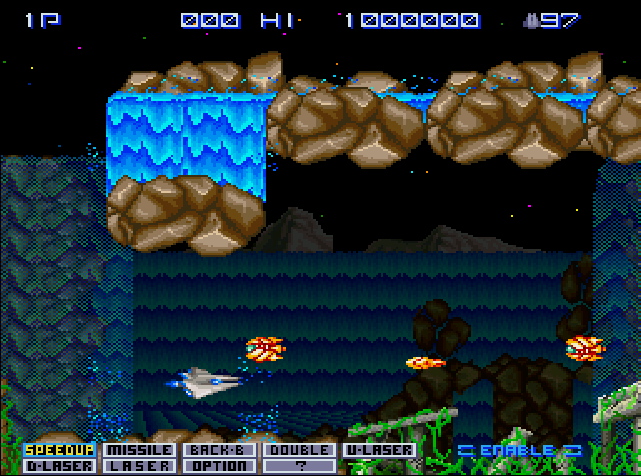
Graphically the game is nice, though doesn't push the platform to the heights of say Aquales - remember however that this is a game from 1990. The bonus stage is perhaps the best looking, though its a shame many won't experience it first hand. This stage also harbors a blinder of a track, even if it isn't as good as the version at the loading screen of Nemesis '94 (But not Nemesis '93...see why I didn't want to get into it!). Perhaps the Roland MT-32 and SC-55 soundtracks are nicer, but I don't own either (You can get the real units to work with the emulator via MIDI, if you do in fact own them). Sounds and music, otherwise, are pretty standard fare for Gradius games, so at least you know what you are getting.
The options menu is slightly meatier than some X68000 games and consists of a difficulty setting (Easy, hard and 'Nomal' [sic]), number of lives option (3 or 99 with no score – good for practice!), sound module selection and button/key configuration. There is also a sound test option for previewing the various tracks used throughout the game.
All in all though it is only a Gradius-average in some areas, the solid gameplay and adjustable difficulty shine through and makes the game very accessible, making for a great entry in the series. There are 14 stages too, so plenty of game to be had. Highly recommended.
R+R - Nin-Niki
This horizontal doujin shooter has only had a demo to play, which teased many X68000 fans for a good while, as the single level demonstrated a solid game with decent music. There was a video floating round showing off the rest of the game and a seller on Yahoo Japan Auctions was selling the full version, so I was looking forward to one day playing the entire game. That is until recently, when the full game turned up on the Tokugawa forums. Thanks to the user who shared it the full extent of the game can now be played. And there is good news: it is even better than the demo suggested. While the demo's stage only had one fairly bland monotonous background, the rest of the game's stages have much more variety. It needs to be mentioned the game is pad only, so if you don't have one you'll have to use Xpadder or similar.

R+R initially looks rather by-the-numbers, with two very standard weapons, switchable via a button – a straight shooting laser and a rapid fire spread vulcan type shot. However you also have access to a purple single shot that is activated by moving left/right or up/down quickly, and also when you upgrade. You don't need to be firing to utilise this shot. On upgrading: this is where the game differs from many other 16 bit horizontal shooters. Instead of collecting power up icons your main weapon increases in power through scoring; that is as you kill enemies a counter fills until a set number is reached (which increases with each level gained). When this happens your weapon is upgraded, and as previously mentioned, your ship lets out a purple shot. An interesting deviation from the norm, it means you really don't want to die in certain situations, such as when facing a boss. There is some scope for upgrading here though, as bosses always feature additional enemies - be it waves of popcorn enemies, or a couple of stronger ships. If faced with this situation you'll have to balance gaining levels with taking out smaller enemies. Enemies do usually have multiple parts to destroy, again providing more scope for upgrading. The game has a decent difficulty level, even stage one's enemies let out a relatively high proportion of firepower at you for a first stage. In the options menu you do get a choice between easy, medium and hard, though there isn't a massive amount of variation between them.. If you aren't the best player the game can be set to unlimited credits (extends), so you'll be able to practice in comfort. You will have to start from the beginning of the stage though.

There is a good amount of variety in the game, with only a few enemies repeated or re-coloured from level to level, and each of the five stages has its own theme. There is a desert, a standard asteroid shower level, a 'Dope space' stage (presumably they meant deep...there is a lot of amusing engrish in this game), a claustrophobic 'Techno Base' and a fairly short but hectic final level, named 'Last Tention'. Enemies consist of a mix of waves of popcorn enemies and larger foes that take a decent battering even from your laser. Some of these have a destructible part to them in addition to their main body. On occasion you will be hard pushed to destroy some of these larger ships before they fly off screen – enemies usually come thick and fast. Most stages have 'The vigorous attack' that comes about mid level and features more organised and unique formation(s), or a unique enemy, though in difficulty terms they're often similar to the rest of the level.

As previously mentioned R+R's demo featured a nicely detailed, if somewhat monotonous, background and subsequent levels in the full version mostly improve upon this. There is plenty of parallax scrolling too, some stages with several layers. Scenery often becomes a feature of the game, for example stage 4 is maze like, with enemies attempting to shunt you into dead-ends and narrow passages. Animation is excellent when it comes to enemies - their engines glow, ships turn, rotate and many have firing animations with various parts of them moving. There is relatively little animation on the backgrounds, though stage 4's boss does have blinking lights behind him. My only issue with the graphics is that sometimes enemies will briefly disappear while other enemy ships explosions pass over them
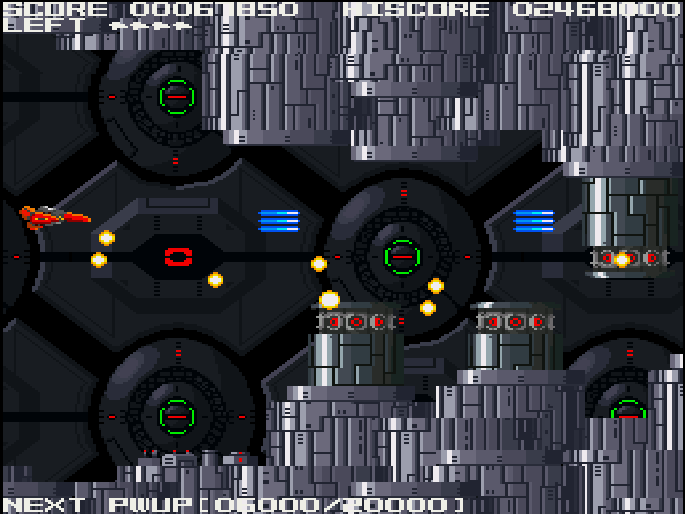
Sound is generally excellent throughout. It features some great music that is typical of the X68000, with many memorable tunes, with stage four's being my favorite. The synth lines in particular stand out. Each tune fits in well with its particular stage's setting. Each boss shares the same music, which is good, though a little variety would have made the music aspect of the game perfect. There is a nice loading track too, though it isn't on for long. Sound effects do the job well enough, though perhaps a few more could have been done for the enemy explosions.
R+R's options menu features the difficulty settings as previously mentioned, in addition to number of lives (0-5) and amount of extends (i.e. credits; none, three, five and unlimited). I'd have liked a music and sound test option though. Menus are entirely in English too.

All in all R+R is well worth the search you may have to do to find it. It might be a tad bit short, but there is a decent challenge. While the demo was fairly hard to find it is still the most widely available, so the Tokugawa forums are the place to go to for the full version. I have spotted it on another forum near the top of search results for the game, so it is spreading at least. If you are having difficulty, message me and I'm sure I'll be able to help you.
Thursday, 25 November 2010
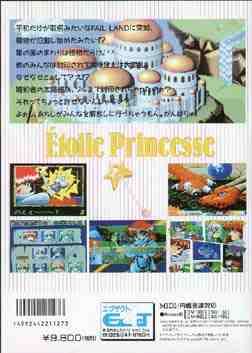
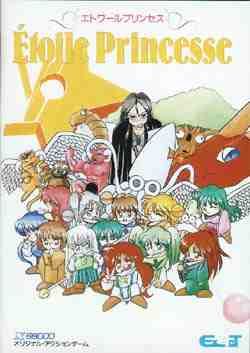
Etoile Princesse - Exact
Etoile Princesse's (Etoile from now on) story is presumably based on the French fairy tale Princess Belle-Etoile, though the opening screen names the setting (amusingly, and I assume unintentionally) as 'Fail-Land' - a country located on continents that float in the sky. Your character seems to be named Rilule, a red-headed girl who appears to be a witch of some kind, on a quest to rescue other magically imbued girls. There is plenty of Japanese dialogue throughout the game, though it doesn't tend to hinder play. The menus are mostly Japanese however, though as there are fairly few of them trial and error quickly allows you to work it out.
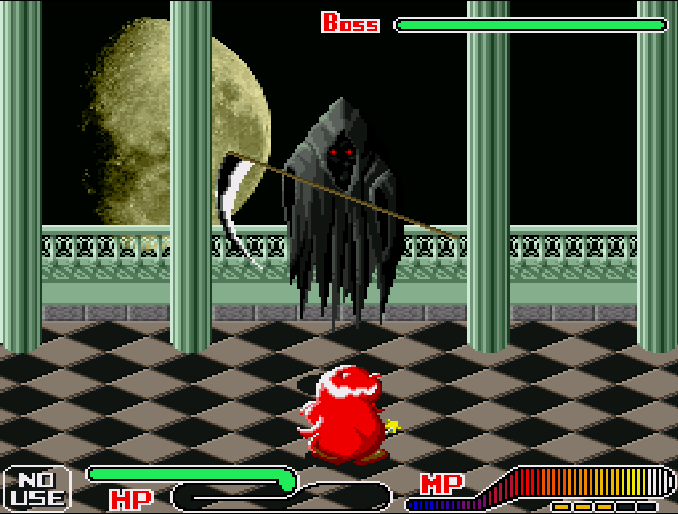
For those that have enjoyed Twinkle Tale on the Megadrive this game may be right up your alley. Like the aforementioned game you control a witch in a fantasy themed multi-directional shooter, however Etoile combines more adventure and RPG elements, bringing it closer to Zelda and the like. The game is organised into mostly free scrolling stages littered with enemies that regenerate off screen and have a boss at the end. Some stages are different however, such as one which sees you in a forced vertically scrolling part. The layout of each stage is often fairly labyrinthe in nature, with switches to toggle in order to proceed, obstacles and traps to avoid and dead ends, sometimes with chests to open. Each stage generally contains a differing multitude of varying foes that differ in form and attack, with a boss at the end. Similarly each stage has a unique setting and thus aesthetics. Difficulty not too hard, though bosses can be very large and with limited on screen space it can become very crowded. Before each stage there is a map screen which allows you to save and load, with an occasional choice between stages.
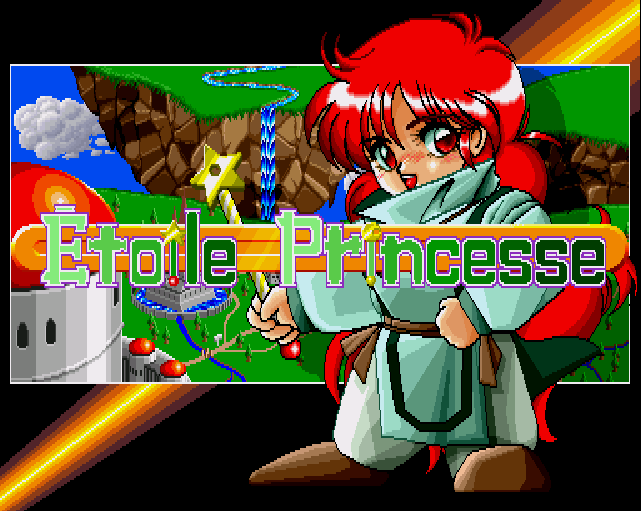
You initially play as a red haired girl who casts circles of stars straight out in front of her - I say initially as the reward for defeating bosses is often a new character to play. At the start of each stage you choose two of these to take with you and are able to swap these characters out mid play – as each has a unique main shot and bomb some will be more useful than others in various situations. Note that magic and hit points won't raise upon swapping out, so if you die playing with any character its game over. The bombs are activated by holding down the main shot between 1-3 seconds – any longer than this and the charge goes back to zero, which is helpful if the situation changes and you don't want to waste any of your magic points. The magic gauge is filled by collecting stars dropped by defeated enemies, or using one of the leaf items found in chests. Other chest items found are berries that increase your health, vials that increase your maximum health, rings and a compass, amongst others. Items are equipped through the inventory screen, accessed by holding both A and B on a joypad, or shift on the keyboard. The berry and leaf items are used once your health and magic are depleted. Beware of chests though – they aren't always what they seem, some will jump at you with teeth bared! In addition enemies drop a variety of instant effect pick ups when killed – apples and muffins to restore health, the aforementioned stars and mushrooms that restore all your magic. Some leave behind time delay bombs too. Characters also have the ability to jump, allowing you another option to dodge enemies and their attacks, but also to combat obstacles and access hidden areas. Some enemies have the ability to jump too though. Your characters can't face in diagonals which can become a bit of a problem in some situations, though pressing diagonals means you can strafe forwards and to the corresponding side, in the direction you were facing.
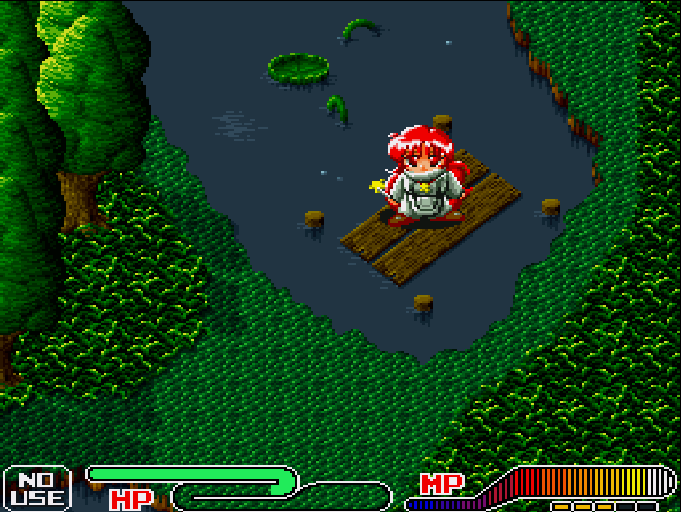
The graphics for Etoile are wonderfully vibrant, large, chunky and colourful. This fits well with the cutesy fantasy theme and light humor occasionally present (Such as the demon boss dropping his furry pants to show a blur of red pixels). The terrain tends to be excellently done and varied between levels. Some levels take place in dark castles with swirling lava below, another in a verdant swamp wood and another in a ruined town. Some have lovely animated background effects – aside from the lava there is also rain, thunder and the swamp's pools of water have bubbles popping at the surface. Its little touches like these that make a game's graphics stand out, demonstrating the attention to detail put poured in. Even the title screen is animated, and the rain stops when you enter covered areas. There are a few errors, such as your character appearing in front of some objects when they shouldn't, but they are far and few between. Some stage's backgrounds are very similar or the same over the level, especially in the forest part of the swamp-wood stage, but as mentioned with it changing every level it doesn't become a problem. I should also mention the game makes use of the transparency graphic effect frequently, thus PI's XM6 won't display many parts properly – use GIMON's XM6 TypeG or WinX68k-high-speed.
Sound effects are generally good, with enough variation so as to not become annoying. Each character's attack has a different sound for example. Some do share a lot in common with Exact's other excellent X68000 game, Naious. Music wise though there aren't any external sound module tracks for the MT-32 and the like, not too many players will be affected. The music is good enough for the game with several good ditties and usually suits the mood of the stage. There isn't a vast amount of difference between instruments, however with as many tracks as there are, it is perhaps inevitable. As with the sound effects it never becomes annoying. I feel sometimes I've been spoiled listening to too much X68000 music, forgetting how superior much of it is to the majority of the system's contemporaries, but I have to remain objective and compare it to other X68000 titles! The options menu is exclusively for the usual sound effect and music tests, with an option for the source of the music.
So, those are the main ins-and-outs of the game. An enjoyable adventure with excellent graphics and a well implemented control scheme. There are few criticisms to mention – the simplicity of the stage's 'puzzles', being almost exclusively activating a switch and few small graphics issues, but nothing game breaking. Except perhaps if you don't like navigating the maze structure of some levels, however the majority are fairly short stages. For me it is up there in the system's top twenty.
Written by: Oliver Knight (Oli_lar)
Subscribe to:
Posts (Atom)